Friday, November 2, 2012

Preventing and Responding to Uncivil Classroom Behavior


I’ve come to a frightening conclusion that I am the decisive element in the classroom. It’s my personal approach that creates the climate. It’s my daily mood that makes the weather. As a teacher, I possess a tremendous power to make a child’s life miserable or joyous. I can be a tool of torture or an instrument of inspiration. I can humiliate or heal. In all situations, it is my response that decides whether a crisis will be escalated or de-escalated and a child humanized or dehumanized.


It is helpful to talk about these problems and hear what strategies other instructors use.
[Then] you don’t feel like you’re the only one.



Executive Summary:  This message offers resources about classroom incivility and support for preventing and dealing with disruptive classroom behavior.   It is meant to prompt reflection.   

Behavior Problems in College?  In forty years of teaching, I never had a student refuse to talk outside class—until October 2004.  On a student paper (inside other comments) I asked (politely and privately) for a brief meeting.  In return, I got an angry explosion—and very public, in-my-face—challenge:  All you need to know is in what I wrote.  I don’t need to meet with you, I’m busy and I’m not about to do it.  (I’ve omitted expletives.)  Another student responded to a benign, private expression of concern (about attendance, in e-mail) by advising me to butt out of her business.  Whoa!  Judging from behavior I’ve seen in classroom visits (and an increasing number of anecdotal reports from colleagues) out-of-bounds behavior is unhappily common if not openly discussed.   It’s happening at universities everywhere, and not only in freshman classes.  

We work hard to create a healthy atmosphere for teaching and learning.  A single disaffected, disengaged (or downright nasty) student can disrupt a carefully crafted climate of trust and collegiality and push us off balance.  Some issues (e.g. cell phones and side talk) are trivial but irritating.  Verbal assault and other disruptive behaviors can be much more serious.  All deserve attention, and how we respond to these things is noticed by students.  Solutions are suggested by twenty years of scholarship, and we begin to address the problem by acknowledging it is real.  The problems vary; there is no fits-all solution.  An excellent, compact review and strategies that prompt preventive reflection on your teaching practice, can be found at

http://www.umfk.edu/pdfs/facultystaff/combatingmisconduct.pdf
Combatting Classroom Misconduct (Incivility) with Bills of Rights
(Linda Nilson and Susan Jackson, Clemson University)

http://www.temple.edu/tlc/resources/handouts/problem_situations/Dealing%20with%20Student%20Incivility.pdf  
(Temple University)

http://www.sc.edu/cte/guide/classdistractions/index.shtml
(University of South Carolina)


My personal suggestions     I began to write about incivility in 2004, for my own faculty colleagues at Hawaii Pacific University.  My goal was to open conversation, for the culture then was one of silence.  They began to talk, first to each other and then to me.  Over a year or two, the culture shifted dramatically.   Here are some key ideas:

Keep your balance.    With few exceptions, most student behavior problems—even verbal attacks—are not about you.  This can be hard to believe when someone is attacking you verbally.  Don’t take it personally, keep your perspective intact, and delay response so you have time to reflect and consult others.

Collect feedback from your classes early and often.   Unvoiced concerns can be a major spoiler of class culture, and they can fester into attack mode on end-of-term evaluations.   Early feedback gives you an opportunity to re-shape instruction or approach when practical.  Perhaps more than any other behavior, simple self-assessment of teaching (such as Start-Stop-Continue) communicates your caring about the student experience.  This strategy also helps students understand they and their peers have different but complementary strengths in their methods of learning.  Getting started is easy, and the results deeply satisfying:   How-to strategies are here:  Assessment of Teaching http://www.hpucait.com/kb/?p=192   Don’t wait until the end of a term to do this.  Start early, and be certain to act constructively on the feedback when circumstances make change appropriate.

Co-create expectations with your classes.  Doing this is a major departure from rules-in-the syllabus, and while not for everyone it does generate major commitment to civil behavior from your students.  Read about this, and about how-to-do-it,  in the Nilson/Jackson article linked above, or at http://cait.hpu.edu/kb/?p=222  

Model positivity in conflict; be careful about language   You will be seen as direct, but accessible and positive when you use appropriate language.  Avoid  language that might be interpreted, even when you didn’t intend so, as public demeaning or shaming.   When possible, set boundaries in private.  When student behavior sets off anger, frustration or shock, you may feel like striking out, but avoid reactive behavior.  But do tell the student, as privately as possible:  I’m excited by your passion and intensity about this, but expressing it in public is not appropriate, and harms my relationship with other students, who look to me for leadership.  We need to continue this conversation in private.  Then invite a decision:  When and where would this work best for you?  Even when a question could have been answered by consulting your syllabus, restrain negative comments.  Doing so will pay off in long term trust.

Develop knowledge of your institution’s referral resources.   There are times when students need direction to campus mental health resources.  (1) Find out what those resources are, and (2) make proactive contact with them to learn the best ways of referral.  (3) Carry a campus security contact number and learn from your supervisor when to make such a contact.  (4) Build a relationship with your supervisor or department chair; support is important when you find yourself in trouble.   File a proactive written report with this person for documentation when you get unusual student behavior in class.

Consult more experienced colleagues, or your teaching-center personnel.  For behavior or other challenges, other faculty members are a rich source of support.     Where I worked in Hawaii, faculty were reluctant to discuss student behavior for fear of being seen as wimpy or witless.  But veterans usually welcome requests for support and have long ago solved what seems intractable to newer instructors.

The internet is rich with resources, many of them at other teaching center sites.  For instance:
Classroom Management Tips     http://cait.hpu.edu/kb/?p=231
Student Behavior Problems      http://cait.hpu.edu/kb/?p=217
Collaborative Syllabus           http://cait.hpu.edu/kb/?p=229
University of Texas        http://coerll.utexas.edu/methods/modules/classroom/01/discipline.php
Discipline Pitfalls in the College Classroom
http://www.facultyfocus.com/articles/effective-classroom-management/classroom-management-discipline-pitfalls-in-the-college-classroom/  

Contact me for help:   I am retired and live in Vermont,  but am easily contacted by email:  coach.faculty@gmail.com.   Explain your problem in brief, and if possible provide a telephone number and hours when you can be reached.   In email, alternatively, we can arrange for you to call me, or to connect via Skype.  There is no cost for this; I enjoy being helpful.  On occasion I do two-hour interactive workshops on classroom management;  for this work there is a modest honorarium (plus travel and lodging if I am not near your area, which can be waived if I am traveling there anyway).


Michael W. Dabney (retired teaching center director, Hawaii Pacific University, Honolulu)
702 Wake Robin Drive Shelburne VT 05482
coach.faculty@gmail.com (best contact)
cell: 808-781-3294 home: 802-985-0088




Saturday, September 29, 2012

Motivation September 29, 2012


September 29, 2012, near Milton, VT.  I am celebrating about a month of retirement living in Shelburne, VT near the college town of Burlington, adjacent to Lake Champlain.  I drive each fall to visit extreme northern Vermont, where foliage is now at its colorful peak.  As temperatures fall, the synthesis of chlorophyll slows and then stops.  As the green breaks down, other pigments become prominent.  (iPhone)

__________________________

People with high assurance in their capabilities approach difficult tasks as challenges to be mastered rather than as threats to be avoided.
~ Albert Bandura (1925-  Stanford psychologist)
Whether you believe you can or believe you can’t, you’re probably right.
~ Henry Ford (founder of Ford Motor Company, d 1947)
Any activity that prompts self-assessment and goal-setting, and leads students to a clearer vision of what they want from life as well as from education, will likely sharpen motivation and achievement.
~ “Motivation” from Hawaii Pacific University’s Knowledge Base  http://cait.hpu.edu/kb/?p=255 and http://cait.hpu.edu/kb/?p=253

Hardly anything important happens that doesn't have to do with relationships . . . It's getting to know people, being interested in them. … Life is built on genuine relationships, where trust and integrity are without question. When that is there, there are no limits.
~ G. T. Buck, president of Davis and Elkins College (rural WV, enrollment 710), on the roots of motivation


Kari Brunson, who I met in 2009 when I began following ballet dancers on Twitter, had been in 2009 a professional dancer with Pacific Northwest Ballet for nine years.  She broke her contract with PNB in August 2009 to become a professional chef in two Seattle restaurants.  Now, in 2012,  she is a private chef and operates a fresh juice bar at several Seattle locations.   What motivates this kind of decision?   The story of the photo-in-a-pot is at http://blog.seattlepi.com/thebigblog/2008/03/05/a-ballerina-in-a-pot-the-story-behind-our-photo/
 

Executive Summary   Dual hopes drive most teachers: to support student engagement in learning, and to deepen student investment in the process.   The key questions for an educator:  How do I create conditions in which my students make responsible choices about engagement and investment, choices which in turn are based on an authentic understanding of their own needs?  How do I help them discover those needs and How do I establish my content as helpful? In this message, revised from one I wrote for Hawaii Pacific University faculty in 2009, we examine the concept of motivation and a few ways of answering these questions.  You’ll have many added ideas of your own.
Links were tested and active when this message was sent.  If you find otherwise please notify coach.faculty@gmail.com.

Choices can be driven from within, or from out   An impetus to action can arise extrinsically, from sources outside an individual, to gain a reward or avoid a punishment.  Or it can arise from within (intrinsically), related to (a) authentic needs (from the learner’s self-understanding of goals) or as (b) reaction to imposed control.  An attempt to impose control from outside may work for a time but later backfire when the reward or punishment is no longer supplied.  We all might wish for authentically self-motivated students, but many--perhaps most students come to our care without a clear view of their goals or the skill to establish authentic targets.

Understanding the motives of others is often very challenging   From Africa, Maria arrived in a Fall 2004 general biology class in the 4th week of a class that met only 11 Saturday mornings.   The late arrival—related to travel and visa issues—was beyond her control.   Well-mannered and articulate, she met me after  class to collect handout materials and to discuss catch-up plans.  She seemed clear about the catch-up challenge.  She skipped the 5th class, and was unresponsive when I contacted her.  A suggestion to drop was ignored.   In my mind, her absence from class was irresponsible.  She refused to discuss the matter, not recognizing (I believed) this would produce failure.  However, I had missed a key element of her motivation.  Maria, soon after she entered my class, already viewed its completion as impossible.  But she saw the drop option also as impossible:  loss of the credits would have caused her country to withdraw its support.  Failure was the better of two bad options.  Perhaps the felt shame and illogic of this dilemma made it impossible to explain; I later learned of her reasons from a counselor.    Motivation is a complex fabric, and reality is often less than clear.  

Motivation:  Is it something we are, or something we do?   Motivation is often regarded by teachers, parents and supervisors (Edward Deci calls them “one-ups,” people in authority positions) as situations or rules we set up, tools to control students, children or employees (“one-downs”). The tool is often a reward (a carrot) or a punishment (a stick).  Anyone who has used carrots or sticks knows they often work satisfyingly well, for a while.  But two big problems lurk:  (1) When a one-up stops supplying the carrot or stick, the one-down loses interest; and (2) an attempt to control may cause the one-down to respond by counter-attack:  I’ll show you that you can’t control me.  In Alfie Kohn’s Punished by Rewards (Mariner Books, 1999) you can find a research-based analysis of the problems inherent in carrot-or-stick strategies.

Edward Deci,  a humanistic psychologist whose work is quoted in Kohn, makes a strong case that self-determination trumps control when teachers, parents or managers are trying to promote responsible decision-making.   The most authentic power driving choices, he believes, arises when a decider understands his/her own needs and acts in ways that serve those needs.   Find details in his compact, accessible book Why We Do What We Do:  Understanding Self-Motivation (Penguin Books, 1996)

Carol Dweck, in Mindset – The New Psychology of Success (Random House, 2006 and available in paperback) is an research-based but popularly-written look at powerful internal beliefs (what she calls “fixed” and “growth” mindsets).  Dweck describes an individual with fixed mindset as driven by self-judgment:  this person sees both failure and praise as validation of self-perceived insufficiency, ineptitude—or superiority.  This person may be a high performer, but gives up easily in the face of challenge.  Someone with a growth mindset, on the other hand, may feel disappointed by setback but sees failure as an energizing opportunity.  Dweck believes that such internal beliefs (a) are largely responsible for success and drive; (b) emerge through childhood experiences; and most important:  (c) can be revised. For teachers, parents and supervisors, Dweck’s work has immense and practical implications.  It means we have important choices that can influence an attitude of success in those we parent, teach or supervise.  Let us look at a few possibilities, from which you can extrapolate many more examples and applications to your own practice.:

Successful teachers model a growth mindset   One friend at Hawaii Pacific University, someone I regard as a master teacher, tells students:  Some of you will find my class materials and topics more difficult than others.  Indeed, some of you will struggle deeply.  But know this:  it is my job to support that struggle; and every one of you will exit my class with more knowledge of the content, better able to navigate it, and a more competent navigator of academics in general, than when you began the class.  [Contrast this with the UH professor—for whom, in 1969, I was a TA--who sternly warned his class of pre-med students:  Look to the left, look to the right; two out of three will be gone from this class in three weeks.]  

Connect students to their own goals, motives, targets and needs   What does education mean?  What will be your investment in it?  Discuss and dissect student investment in education, and weave that thinking into your in-class and out-of-class discussions with students.  Take a peek at Skip Downing’s Oncourse materials here:  http://www.oncourseworkshop.com/On%20Course%20Principles.htm

Build students’ awareness of their most important skill sets, learning preferences, assumptions and skill development needs:  http://cait.hpu.edu/kb/?p=320 = When you are pressed with questions like What will be on the test?   Ask students what they think employers want.  A guest speaker who hires nurses, for example, will validate that many of the facts students learn will be outdated when they graduate, and that employers most value self-motivated learners and problem-solvers who can work with others in teams.

Scaffolding – building assignments in small steps—helps focus students on specific skill-sets, focuses learners on process and skills rather than solely on final product.  When I lived in Honolulu, it was common to be helped in the Apple Store by a grateful HPU student who spoke of his teacher as demanding presentations but generous with energy helping students understand the elements of successful presentation.  How different, and more highly valued, is the experience of writing as a process of improving thinking, when students come to understand the value of drafts and peer comment.  The why and how of scaffolding is elaboated here:   http://serc.carleton.edu/NAGTWorkshops/webdesign/Scaffolding/index.html

Use Performance Rubrics to help focus students on elements of performance and on continuous improvement, and off from grades and final products.  Get started with rubrics at http://cait.hpu.edu/kb/?p=290g=  Find a compact introduction to rubrics, and examples, in Using Rubrics to Promote Thinking and Learning in 2000, available online at http://www.ascd.org/publications/educational_leadership/feb00/vol57/num05/Using_Rubrics_to_Promote_Thinking_and_Learning.aspx .

Offer hope, any way you can.  Keep classroom discourse civil and safe.  Make mistakes possible and productive.  In Education for Judgment (1991), C. Roland Christensen offers this:  It would be hard to name a more valuable pedagogical accomplishment than the mastery of questioning, listening, and response: three teaching skills as linked, though distinct, as the panels of a triptych.  One of the most information-rich documents I’ve ever seen at one spot on the web is called “Questions for Class Discussion” at a Harvard teaching ccenter page:  http://www.hbs.edu/teaching/docs/Questions_for_Class_Discussions_rev.pdf

 
________________________

No doubt a small percentage of our students have been blessed with supreme self-confidence. But I believe they are the exception. Most students, like most human beings, need help in learning to believe in themselves. Teachers can provide that help. We do it in the ways in which we talk to students; in the praise we give them even when they have failed. We do it by helping them understand that success — in some shape or form — is possible.
Here’s wishing you a peaceful holiday season, one that encourages
 spiritual regeneration and deepens connections with the people you love.


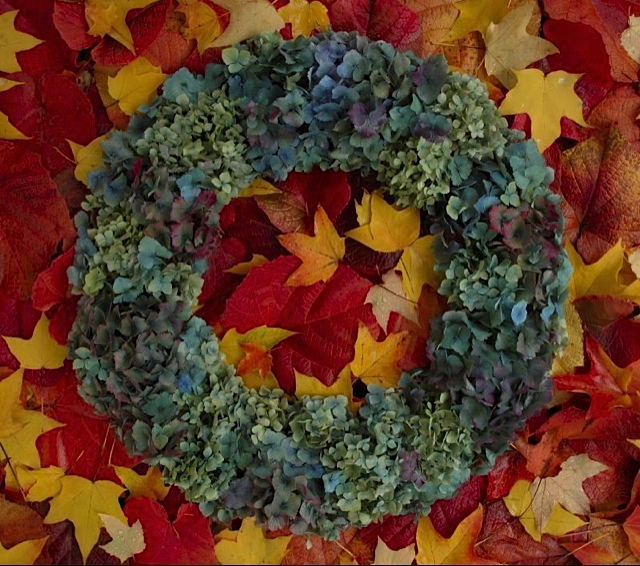
Image of maple leaves and Hydrangea blossoms from Dunn Gardens, Seattle, WA


Forthcoming . . .

October:   Preventing and Coping with Uncivil Classroom Behavior
November:  Building Skill in Leading Student Discussion
December:  Building Persistence in Students

If you are attending the POD Conference in Seattle late in October, please look me up there!

Michael W. Dabney
702 Wake Robin Drive
Shelburne, VT  05482

Email:  coach.faculty@gmail.com
Phone:  (cell) 808-781-3294   (home) 802-985-0088

Forthcoming travel:  

Seattle--October 23-30
Honolulu--October 30-November 8
New York--November 9-13
New Jersey-Washington DC   November 21-27
Silver Spring--December 18-28
Seattle:  February, March, April, June

Wednesday, August 29, 2012

Building Belonging (#2 in a monthly series)


Helping Hands, a sculpture by Louis Bourgeois (image by lalobamfw, Flickr Creative Commons)


Long term change requires looking honestly at our lives and realizing that it’s nice to be needed,
but not at the expense of our health, our happiness and our sanity.
~ Ellen Sue Stern   (author, speaker and relationship coach)

We make a living by what we get, but we make a life of what we give.
~ Winston Churchill

What the heart gives away is never gone. It is kept in the hearts of others.
~ Robin st John
To effectively work in the distance-learning realm, your students need to feel close to their classmates and professors, despite the miles between us. Establishing a bond, a common ground, a supportive arena for thought and expression may mean the difference between a successful, compassionate classroom and a lost, detached one.
~ Gina Greco, writing 5/21/09 in the Chronicle of Higher Education (‘Commentary’), about online classes

Executive Summary:  In 1995 I spent days prowling Hawaii schools to “snapshot” behavior management and culture, then help identify tools for positive change.  In one visit, the principal invited me to a visit a 2nd-grade classroom; the teacher had given her students a simple tool to identify conflict and then had taught them, successfully, to defer resolution.  I found it odd that other teachers knew nothing of this, a strategy which would have made their jobs much easier.  Just before school ended, a 7th-grade teacher ran up to me and told a story of being pushed to the ground by an 8th grader days before.  She had reported the incident but continued to see the student on campus and wondered what had been done to discipline him.   Shall I send this? she asked, handing me a letter for the principal.  I read it, and asked:  Could you just visit the office and ask him?  Her answer startled me:  I never thought of that.  The teachers at this school were isolated and felt individually unimportant.  As a leader, whether you facilitate learning in a classroom or supervise other teachers, your behavior choices point vigorously to what you value.  An individual’s strong feeling of belonging and connection to others in the group provide motive and support for best performance.  This message explores some ways to intentionally develop these connections—crucial to our communication of content.   
Links were active when this message was published August 28, 2012; please advise coach.faculty@gmail.com if you find otherwise.  Contributions of ideas to share are always welcome.

CREATING a feeling of belonging in students isn’t magic, but it involves an array of strategies in a repertoire you can develop over time.  Here are some techniques that help students find connections to you and to one another.  In so doing, they foster a sense of being cared for, of belonging to a supportive group.  They thereby promote student success and retention.  You’re probably doing many of them already:  for new ones, patience pays: try one thing at a time.

CONNECTIONS BEGIN with your earliest contacts.  Before classes start, some instructors send welcoming mail introducing themselves and noting key skills the class will call upon, concepts the class will develop, benefits the class will confer.  Such messages, sent to the whole enrollment, can invite students to reflect on their reasons for taking the class, reflection which then becomes a key building block in self-motivation.  Marc Gilbert (HPU’s NEH Endowed Chair of World History) describes his discoveries in Po’okela, and notes the benefits of early trust-building:  http://www.hpu.edu/TLC/ImagesFiles/Jan-Feb09.pdf (No. 41, Jan-Feb 2009)

AT THE DOOR   Greeting students with a smile and friendly voice at the doorway in earliest classes—or from time to time during a term if you do not do it very day—welcomes and says I’m glad you’re here.  Many of them harbor deep self-doubt; create warmth by finding opportunities to say I believe in you (directly or indirectly).

TELL THE TRUTH ABOUT CHALLENGES AHEAD   It’s possible, for instance, to say the course content will be challenging, and some of you will find this harder and spend more time than others.  A few will struggle very hard but still be successful.  I’m here to help, and I expect and believe you will also encourage and support each other.  In some pre-professional courses, students may believe it’s your job to deliver most of the content, but you can point out (1) that you’ll rely heavily on their willingness and interest in preparing on their own, (2) that you can’t give them all the content, and (3) that the greatest gain from class activities (including lectures) will come when they do high quality preparation.  Finally (4) employers will most value independent learners.  (Invite an employer to say so!) You may have to teach some of them what good prep means, and it may help to do so in the context of an exchange about what good preparation or good student investment means in terms of specific behavior.  For some detail about how to do so, see  Expectations  http://www.hpucait.com/kb/?p=222 or talk to your teaching center personnel about  your specific course; you’ll leave with a plan.   An article in Inside Higher Ed (10.23.09) discusses employer views of professionalism—or absence of it—in graduates: Are Today’s Grads Unprofessional?  http://www.insidehighered.com/news/2009/10/23/professionalism   

USE STUDENT NAMES   As often as possible, begin using student names and encourage students to use one another’s names.  Some instructors create and carry table tents with pre-printed names; others use name tags in early classes, or use seating charts and make it a point to call on students by name.    Find a wonderful article and 27 creative ways for you and students to learn names:  http://www.ntlf.com/html/lib/bib/names.htm  (Joan Middendorf, Indiana University) and even more at http://trc.virginia.edu/Publications/Teaching_Concerns/Misc_Tips/Learn_Names.htm (Michael Palmer, University of Virginia).

OFFICE HOURS   Instead of waiting for students to come with problems, invite or require them to come to chat and gain insight about them.  (Some make this visit an assignment.)  Changing this culture makes it easier for them to ask for help.

CONNECT STUDENTS TO ONE ANOTHER   Activities that bring students together and use names and encourage cooperation—first on simple tasks--build community in classes.   I teach this by example in workshops, and on request (coach.faculty@gmail.com) I can send the PowerPoint file or this will remind you:  http://serc.carleton.edu/introgeo/interactive/tpshare.html  [These and similar strategies have the added benefit of being powerful and simple assessments of learning that don’t involve grading.] If you are not an experienced user of groups to work in class, be aware that effective group work, especially groups of 4 or more, calls upon skill sets many students learn and develop in college and will not possess when they first enroll.  Use pairs and small groups first.

BE PREPARED FOR LATECOMERS   Students often enter classes late, for reasons they can not control.  It’s helpful to keep handouts (or prompts to web-based resources) and to confer immediately with students who have missed significant instruction.  Don’t buy the implication that you are responsible for recreating their learning experiences, but do what you reasonably can and always ask them:  I know this is difficult for you.  Talk with me about your ideas for fixing this problem, and tell me how you think I can help you.

PROMOTE GOAL-SETTING and REALISTIC SELF-ASSESSMENT The use of rubrics prompts realistic self-assessment and personal goal-setting, and can motivate major performance changes. To consider ways to assist students in developing self-understanding, suggestions are at http://www.hpucait.com/kb/?p=320  For rubrics, begin at: http://www.ascd.org/publications/educational_leadership/feb00/vol57/num05/Using_Rubrics_to_Promote_Thinking_and_Learning.aspx , a very accessible article that will get you started.

EXPECT THAT STUDENTS WILL SUPPORT ONE ANOTHER A simple way to do this is to use class base groups, core social groups you facilitate purposely to provide cross-support.  Facilitate a culture in which members of a class rely on one another instead of on you for information necessary to the class.  For counsel about forming groups, see http://www.co-operation.org/?page_id=65. There's more about activities at http://www.hydroville.org/system/files/team_strategies.pdf

ASK EARLY AND OFTEN FOR FEEDBACK Perhaps more than any other behavior, simple self-assessment of teaching (such as Start-Stop-Continue) communicates your caring about the student experience.  This strategy also helps students understand they and their peers have different but complementary strengths in their methods of learning.  Getting started is easy, and the results deeply satisfying:  Assessment of Teaching http://www.hpucait.com/kb/?p=192   Don’t wait until the end of a term to do this.  Start early, and be certain to act constructively on the feedback when circumstances make this appropriate. Within-term feedback, in my opinion, is the single most important strategy an teacher can use to prompt self-growth, student trust, and productive changes in practice.

ENCOURAGE QUESTIONS and MODEL POSITIVITY IN CONFLICT   You will be seen as direct, but accessible and positive when you use appropriate language.  Avoid all language that might be interpreted, even when you didn’t intend so, as public demeaning or shaming.   When possible, set boundaries in private.  When student behavior sets off anger, frustration or shock, you may feel like striking out, but avoid reactive behavior.  But do tell the student, as privately as possible:  I’m excited by your passion and intensity about this, but expressing it in public hurts me and harms my relationship with other students, who look to me for leadership.  We need to continue this conversation in private.  Then invite a decision:  When and where would this work best for you?  Even when a question could have been answered by consulting your syllabus, restrain negative comments.  Doing so will pay off in long term trust.

USE TECHNOLOGY   like clickers, or Twitter, or text messages, or email . . . . to prompt student contribution or reflection.  Make sure to do this only if the technology (e.g. text capability) is available to everyone.  Then, for example:  There are two  major points made in the assigned reading for clas tomorrow.   Before class, text (or tweet) me your unique summary of one of them.  I’ll share some of the messages in class.  Text (at 160 characters max) and tweet (at 140 characters max) force brevity and processing.  The point:  get students contributing (and acknowledged for doing so) any way you can.

BUILD WORKING TEAMS AND COMMUNITY Use a search engine (team-building activities) to find a treasure trove of activities to browse, among which, of course, some will appeal to you more or fit better than others inside your class plans.  Writing (in classes and ungraded) can be used to build community, and the how to do this (focused on first-year writing classes) can be seen at http://wac.colostate.edu/journal/vol10/macomber.pdf.  I recommend:  take 45 seconds to read first the Introduction and Conclusion; then read the 7-page body.


Next Up

Next Up in September:  Motivation; and October:  Understanding, Preventing and Managing Student Incivility

A Great Set of Teaching-Tips Resources and Websites:
http://www.hpu.edu/CAIT/CAITResources.html

Stay Connected     You can bookmark the link, or subscribe to this blog feed; you can request a notice of each post by writing me at coach.faculty@gmail.com.  Or, if you are a faculty developer, you can ask for the post content in document form and use parts of it to create your own newsletter, or post the link on your own website.

Beyond the Blog     My greatest satisfaction as a faculty developer came from helping others do their jobs better or more easily.   I retired in 2012 from Hawaii Pacific University in Honolulu and now live in Shelburne, Vermont alongside Lake Champlain (near Burlington) in the northeast.  I travel widely in east and west, and am available both to correspond and to visit schools, community colleges and universities for private consultation or workshops.   

Write me at coach.faculty@gmail.com


Michael W. Dabney
University Faculty Developer & Coach
CONSULTATION  -  INSTRUCTOR COACHING - TRAINING
702 Wake Robin Drive   Shelburne VT 05482
Professional & Organizational Development Network--Member since 2004
575 Cooke Street  A-1800    Honolulu, Hawaii  96813
808-781-3294 or 802-685-0088
coach.faculty@gmail.com
Blog for College Teachers (this monthly post):  http://teaching-snippets.blogspot.com